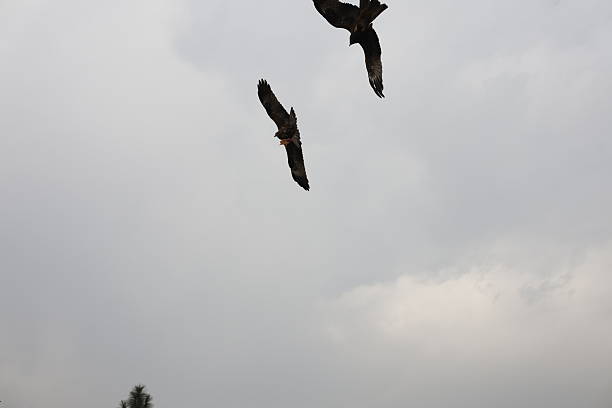
Have you ever watched an eagle glide effortlessly above a storm, riding wind currents that would ground any other bird?
There’s something deeply stirring about that image—the way eagles rise above chaos with apparent ease, how they renew their strength through natural cycles, and how fiercely they protect their young.
Perhaps that’s why Scripture returns to eagle imagery again and again when describing God’s relationship with His people.
In over twenty years of pastoral ministry, I’ve watched believers face storms that should have grounded them—terminal diagnoses, financial devastation, crushing loss, spiritual exhaustion that left them too weary to take another step.
Yet time and again, I’ve witnessed something remarkable: those who positioned themselves in God’s presence experienced a supernatural lifting that defied their circumstances. They soared when they should have fallen.
They ran without growing weary when they had every reason to collapse. They embodied Isaiah’s ancient promise about mounting up with wings like eagles.
If you’re reading this in a season of weariness, facing storms that threaten to ground you, or simply longing for the spiritual vitality you once knew, these forty verses about eagles offer more than poetic imagery.
They reveal practical truths about how God renews exhausted believers, protects His children with fierce devotion, and empowers ordinary people to rise above extraordinary difficulties. Let’s explore what Scripture teaches through these magnificent birds about the Christian life.
What Eagles Reveal About God’s Character
Eagles appear throughout Scripture not merely as literary decoration but as deliberate teaching tools that communicate spiritual realities.
Ancient Israelites lived among several eagle species—primarily the golden eagle and the griffon vulture (often translated as “eagle” in older versions)—making these references immediately meaningful to original audiences.
When biblical writers invoked eagle imagery, they drew on characteristics their readers witnessed firsthand.
Understanding what makes eagles remarkable helps us grasp what God teaches through them. Eagles are apex predators possessing extraordinary strength—they can carry prey heavier than themselves and dive at speeds exceeding one hundred miles per hour.
They soar at altitudes up to ten thousand feet, far above weather systems that ground other birds.
They possess the keenest eyesight in the animal kingdom, spotting prey from miles away and seeing ultraviolet wavelengths invisible to humans. They undergo dramatic molting cycles where old feathers fall away and new ones emerge, restoring their vitality.
Yet for all their fierce predatory power, eagles are remarkably devoted parents. They build massive nests that can weigh hundreds of pounds, carefully teach their young to fly by stirring up the nest and catching falling eaglets, and fiercely protect their offspring from any threat.
This combination of awesome power and tender nurture made eagles perfect symbols for how God relates to His people—strong enough to defeat any enemy, yet gentle enough to carry us when we cannot fly on our own.
Biblical Foundation: Four Core Truths About Eagles
1. Eagles Symbolize Supernatural Strength Beyond Human Limitation
When Scripture compares God or His people to eagles, it’s communicating power that transcends natural ability.
Deuteronomy 32:11 describes how God cared for Israel “as an eagle stirs up its nest, hovers over its young, spreading out its wings, taking them up, carrying them on its wings.” This isn’t just about physical strength but about divine empowerment that enables what would otherwise be impossible.
The Hebrew word for eagle, nesher, carries connotations of strength, nobility, and keen vision.
When Job 39:27-28 asks, “Does the eagle soar at your command and build its nest on high?”
God is establishing that eagles possess independent majesty beyond human control—and if humans cannot command eagles, how much more should we recognize our inability to control God’s purposes?
2. Eagles Illustrate Spiritual Renewal and Restoration
Perhaps no eagle passage is more beloved than Isaiah 40:31: “But those who hope in the LORD will renew their strength. They will soar on wings like eagles; they will run and not grow weary, they will walk and not be faint.” This promise connects eagle renewal cycles to spiritual restoration.
Eagles undergo molting where old, damaged feathers fall away and new ones emerge. The process temporarily weakens them, but they emerge with restored flight capability and renewed vitality.
Similarly, God’s renewal process in believers’ lives often involves seasons of weakness where old patterns die before new strength emerges. The waiting period isn’t wasted time—it’s the necessary process for genuine transformation.
Psalm 103:5 celebrates how God “satisfies you with good things; your youth is renewed like the eagle.”
Commentators note this likely refers to the molting process that restores eagles’ vigor, suggesting God restores believers’ spiritual vitality in ways that defy natural aging or depletion.
3. Eagles Demonstrate Divine Protection and Nurture
Exodus 19:4 records God reminding Israel, “You yourselves have seen what I did to the Egyptians, and how I bore you on eagles’ wings and brought you to myself.”
This foundational deliverance narrative uses eagle imagery to communicate both God’s power to rescue and His tender care in carrying His people to safety.
The image of being borne on eagle’s wings would have resonated deeply with ancient Israelites who observed how parent eagles carry eaglets on their backs when teaching flight, catching them if they falter.
God wasn’t just powerful enough to defeat Egypt—He was attentive enough to personally carry His people through the wilderness, supporting them when they couldn’t sustain themselves.
Multiple psalms return to this protective wing imagery. Psalm 91:4 promises, “He shall cover you with His feathers, and under His wings you shall take refuge.”
While not exclusively about eagles, this language recalls how eagles spread massive wings over their nests to shelter vulnerable young from storms and predators. God’s protection combines overwhelming power with intimate attentiveness.
4. Eagles Model Vision and Perspective Beyond Natural Sight
Eagles possess visual acuity approximately eight times stronger than humans, allowing them to spot prey from over two miles away.
They also see ultraviolet light invisible to human eyes, revealing patterns and markers we cannot detect. This extraordinary vision makes eagles natural symbols for spiritual insight that sees beyond surface circumstances to deeper realities.
Proverbs 30:18-19 lists “the way of an eagle in the sky” among life’s mysteries too wonderful to understand, celebrating the wonder of how eagles navigate vast distances and soar effortlessly.
Spiritually, believers need similar capacity to see God’s purposes beyond immediate circumstances, to recognize spiritual dynamics invisible to natural perception, and to maintain perspective that transcends earthly limitations.
Theological Exploration: The Deeper Meaning of Eagle Imagery
Eagles and God’s Covenant Faithfulness
The first extended eagle reference appears in Exodus 19:4, immediately after Israel’s deliverance from Egypt and just before God establishes His covenant at Sinai.
This placement is theologically significant—God grounds His covenant relationship in His demonstrated faithfulness. “You’ve seen what I did,” He reminds them, establishing His reliability before making covenant promises.
The eagle imagery specifically counters what Israel might fear: that God’s power is distant or impersonal.
Yes, He demonstrated overwhelming power against Egypt, but He didn’t merely open a path and tell them to walk—He carried them like an eagle carries its young.
This personal, protective care forms the foundation for covenant relationships. God doesn’t just command obedience from a distance; He personally enables what He requires.
Reformed theologian Matthew Henry notes that this imagery emphasizes God’s “singular care of Israel and kindness to them.
He not only helped them out of Egypt, but bore them up when they were weak and weary.” The covenant isn’t an equal partnership but a relationship where God provides both the commands and the strength to obey them.
The Paradox of Waiting to Soar
Isaiah 40:31’s promise that those who “wait on the LORD” will renew strength and soar on eagle’s wings presents an apparent paradox.
Waiting feels passive, yet the Hebrew word qavah means active, expectant trust—like a rope being twisted together for greater strength. It’s not passive resignation but engaged dependence on God’s timing and provision.
This paradox challenges Western activism that equates faith with constant activity. Eagles don’t create the thermal currents they ride—they find them and position themselves to catch them.
Similarly, believers don’t generate spiritual strength through self-effort but position themselves through prayer, Scripture, worship, and community to receive what God provides through His Spirit.
Puritan Thomas Watson wrote, “Waiting implies three things: readiness, earnestness, and patience.” We position ourselves ready to receive, earnestly desiring God’s presence, and patiently trusting His timing.
This active waiting produces the spiritual renewal that enables supernatural endurance.
Eagles in Prophetic Literature: Judgment and Deliverance
Prophetic books employ eagle imagery differently than psalms or historical narratives. Jeremiah, Ezekiel, and other prophets frequently use eagles to describe invading armies’ speed and devastating power.
Jeremiah 4:13 warns, “Look! He advances like the clouds, his chariots come like a whirlwind, his horses are swifter than eagles.” Here eagles symbolize judgment’s terrible swiftness.
Yet even judgment imagery contains theological depth. When Ezekiel 17 uses elaborate eagle allegory to describe Babylon and Egypt competing for Israel’s allegiance, the underlying message is that Israel trusted foreign powers (represented by eagles) instead of Yahweh.
The very strength they admired in earthly kingdoms should have pointed them to their God who possesses greater power.
Obadiah 1:4 declares God’s judgment on Edom: “Though you soar like the eagle and make your nest among the stars, from there I will bring you down.” Pride that trusts in apparent invulnerability—even nest-building at impossible heights—cannot escape divine reach.
The same eagle strength that illustrates God’s power becomes an object lesson about what happens when humans trust their own height instead of God’s sovereignty.
The Eschatological Eagle: Protection in Final Days
Revelation 12:14 presents striking end-times eagle imagery: “But the woman was given the two wings of the great eagle so that she might fly from the serpent into the wilderness, to the place where she is to be nourished.” In John’s apocalyptic vision, eagle wings symbolize God’s supernatural protection and provision for His people during Satan’s final assault.
This echoes the Exodus deliverance pattern—God bearing His people on eagle’s wings to safety. The eschatological eagle wings promise that the same God who delivered Israel from Egypt will deliver His church from final persecution.
The wilderness becomes not a place of abandonment but of divine nourishment, mirroring Israel’s wilderness experience where God provided manna.
The imagery assures persecuted believers throughout history that no matter how fierce Satan’s attacks, God provides supernatural escape and sustenance.
The eagle wings aren’t human achievement but divine provision—believers don’t generate their own deliverance but receive God’s empowering grace.
40 Bible Verses About Eagles
1. Exodus 19:4 (ESV)
“You yourselves have seen what I did to the Egyptians, and how I bore you on eagles’ wings and brought you to myself.”
God establishes His covenant relationship by reminding Israel how He personally carried them from bondage, using eagle imagery to communicate both power and tender care.
2. Deuteronomy 32:11 (NKJV)
“As an eagle stirs up its nest, hovers over its young, spreading out its wings, taking them up, carrying them on its wings.”
Moses compares God’s care for Israel to an eagle teaching eaglets to fly—stirring the comfortable nest to prompt growth, yet catching them when they falter, demonstrating how God nurtures His people toward spiritual maturity.
3. Psalm 103:5 (CSB)
“He satisfies you with good things; your youth is renewed like the eagle.”
David celebrates God’s restorative power using eagle renewal imagery, promising that God restores vitality and strength in ways that defy natural depletion.
4. Isaiah 40:31 (NIV)
“But those who hope in the LORD will renew their strength. They will soar on wings like eagles; they will run and not grow weary, they will walk and not faint.”
This beloved promise assures exhausted believers that waiting on God produces supernatural renewal enabling them to soar above weariness into sustained endurance.
5. Revelation 12:14 (ESV)
“But the woman was given the two wings of the great eagle so that she might fly from the serpent into the wilderness, to the place where she is to be nourished.”
John’s apocalyptic vision uses eagle wings to symbolize God’s supernatural protection delivering His people from Satan’s attacks into places of divine provision.
6. Psalm 91:4 (NKJV)
“He shall cover you with His feathers, and under His wings you shall take refuge; His truth shall be your shield and buckler.”
Though not explicitly mentioning eagles, this imagery recalls how eagles spread massive wings over nests, sheltering vulnerable young from storms and demonstrating God’s protective care.
7. Psalm 17:8 (ESV)
“Keep me as the apple of your eye; hide me in the shadow of your wings.”
David prays for protection using wing imagery suggesting eagle-like care, asking God to guard him with the same fierce devotion eagles show their offspring.
8. Psalm 36:7 (NKJV)
“How precious is Your loving kindness, O God! Therefore the children of men put their trust under the shadow of Your wings.”
The psalmist celebrates God’s protective care using wing imagery that recalls eagle nurture, offering refuge to all who trust Him regardless of their vulnerability.
9. Psalm 57:1 (CSB)
“Be gracious to me, God, be gracious to me, for I take refuge in you. I will seek refuge in the shadow of your wings until danger passes.”
David uses protective wing imagery asking for temporary shelter during a crisis, trusting God’s eagle-like covering until circumstances change.
10. Psalm 61:4 (NIV)
“I long to dwell in your tent forever and take refuge in the shelter of your wings.”
The psalmist expresses longing for permanent dwelling in God’s protective presence, using wing imagery that suggests the comprehensive covering eagles provide.
11. Psalm 63:7 (ESV)
“For you have been my help, and in the shadow of your wings I will sing for joy.”
David celebrates past deliverance and present protection, responding with joyful worship under God’s eagle-like care that transforms fear into praise.
12. Ruth 2:12 (CSB)
“May the LORD reward you for what you have done, and may you receive a full reward from the LORD God of Israel, under whose wings you have come for refuge.”
Boaz blesses Ruth using protective wing imagery, acknowledging her trust in Israel’s God who shelters vulnerable foreigners like eagles protect their young.
13. 2 Samuel 1:23 (CSB)
“Saul and Jonathan, loved and delightful, they were not parted in life or in death. They were swifter than eagles, stronger than lions.”
David’s lament honors fallen warriors using eagle speed alongside lion strength, combining imagery of aerial swiftness with terrestrial power to memorialize their prowess.
14. Job 39:27-28 (NIV)
“Does the eagle soar at your command and build its nest on high? It dwells on a cliff and stays there at night; a rocky crag is its stronghold.”
God challenges Job by pointing to the eagle’s independent majesty that humans cannot control, demonstrating divine sovereignty over creation’s most powerful creatures.
15. Proverbs 30:18-19 (CSB)
“Three things are too wonderful for me; four I can’t understand: the way of an eagle in the sky, the way of a snake on a rock, the way of a ship at sea, and the way of a man with a young woman.”
Agur lists life’s mysteries including eagle flight, celebrating the wonder of how these powerful birds soar effortlessly through air currents beyond human comprehension.
16. Daniel 7:4 (NKJV)
“The first was like a lion, and had eagle’s wings. I watched till its wings were plucked off.”
Daniel’s vision combines lion and eagle imagery to represent Babylon’s combined terrestrial and aerial power, then shows its humbling when wings are removed.
17. Ezekiel 1:10 (CSB)
“Their faces looked like this: each of the four had a human face, and each had the face of a lion on the right, the face of an ox on the left, and the face of an eagle.”
Ezekiel’s vision includes eagle faces on cherubim around God’s throne, suggesting eagles represent aspects of divine nature—perhaps vision, swiftness, or transcendent power.
18. Ezekiel 10:14 (NIV)
“Each of the cherubim had four faces: One face was that of a cherub, the second the face of a human being, the third the face of a lion, and the fourth the face of an eagle.”
Ezekiel again describes cherubim with eagle faces, reinforcing their symbolic importance in representing God’s character to heavenly worshipers.
19. Revelation 4:7 (NIV)
“The first living creature was like a lion, the second was like an ox, the third had a face like a man, and the fourth was like a flying eagle.”
John’s heavenly vision includes an eagle-like creature around God’s throne, suggesting eagles represent dimensions of God’s nature worthy of eternal worship.
20. Proverbs 23:5 (NLT)
“In the blink of an eye wealth disappears, for it will sprout wings and fly away like an eagle.”
Solomon warns that riches vanish with eagle-like speed, teaching proper perspective on material possessions that seem secure but disappear quickly.
Practical Application: Soaring in Your Daily Walk
1. Position Yourself for Renewal Through Waiting on God
Isaiah 40:31’s promise of renewed strength isn’t automatic—it comes to “those who hope in the LORD.” This active, expectant waiting requires deliberate positioning through spiritual disciplines even when you don’t feel like it.
Practically, this means:
Maintaining consistent prayer even when God seems silent, positioning yourself in His presence regardless of immediate results.
Eagles don’t create thermal currents; they find them and position themselves to ride them. Similarly, you can’t manufacture spiritual strength, but you can position yourself where God provides it.
Continuing Scripture reading even when it feels like empty words. God’s Word doesn’t return void even when our hearts feel numb. The renewal process often begins before we emotionally recognize it.
Engaging in worship even when you lack feelings of joy. Worship isn’t primarily about emotional experience but about declaring truth about God’s character regardless of circumstances.
Eagles soar above storms by catching wind currents above the turbulence—worship lifts you above emotional storms into truth about who God is.
Staying connected to Christian community when isolation feels easier.
Hebrews 10:24-25 urges believers not to neglect meeting together specifically because we need encouragement during difficulty. Other believers can carry you when you cannot fly alone.
2. Trust God’s Protection When You Feel Vulnerable
Multiple psalms return to imagery of taking refuge under God’s wings. This isn’t passive hiding but active trust that positions you under divine covering when threats surround you.
Practically, this means:
Bringing specific fears and threats directly to God in prayer rather than attempting to manage them through worry or control. Psalm 91:4 promises that God covers those who take refuge in Him—but taking refuge requires deliberately bringing your vulnerability to Him.
Refusing isolation when facing attacks. Eagles protect their nests fiercely, and God protects His children with similar devotion—but you must remain in relationship with Him and His people rather than retreating into self-protection.
Identifying lies you’re believing about God’s absence or abandonment. Satan’s strategy during attack is making you question whether God truly protects you.
Counter these lies with Scripture truth about God’s protective character.
Asking trusted believers to pray for you when under spiritual attack. James 5:16 teaches that fervent prayer of righteous people is powerful—sometimes we need others to pray for protection over us when we’re too weary to pray for ourselves.
3. Develop Spiritual Vision Beyond Present Circumstances
Eagles see what other birds miss—prey from miles away, ultraviolet markers invisible to other creatures. Similarly, believers need spiritual vision that perceives God’s purposes beyond surface circumstances.
Practically, this means:
Regularly asking God to show you His perspective on your situation. What seems like defeat might be a divine setup for greater victory. What appears random might reveal patterns when viewed from God’s vantage point.
Studying how God worked in Scripture during seemingly hopeless situations.
Abraham waited twenty-five years for Isaac, Joseph spending thirteen years between dream and fulfillment, Israel wandering forty years before entering Canaan—all teach that God’s timeline differs from ours, but His purposes never fail.
Journaling about God’s past faithfulness during current difficulty.
When present storms cloud your vision, reviewing God’s past deliverance restores perspective that He who came through before will come through again.
Seeking counsel from mature believers who can offer perspective you lack. Proverbs repeatedly emphasizes wisdom in multiple counselors—sometimes we need others to help us see what we’re missing.
4. Embrace Renewal Processes Even When They Feel Like Weakness
Eagle renewal through molting involves temporary vulnerability—damaged feathers must fall away before new ones emerge. Similarly, God’s renewal in believers’ lives often includes uncomfortable seasons where old patterns die before new strength appears.
Practically, this means:
Recognizing that spiritual exhaustion might signal need for renewal rather than failure. Just as eagles must molt to maintain flight capability, believers sometimes need seasons of reduced activity for deeper restoration.
Accepting that renewal takes time you cannot control or rush. You cannot force new feathers to grow faster, and you cannot manufacture spiritual renewal through self-effort. Trust God’s timing in the restoration process.
Identifying what needs to die for new life to emerge. Are there patterns of self-reliance that must fall away? Relationships that drain rather than nurture? Ministry activities that stem from obligation rather than calling? God’s renewal sometimes requires releasing what we’ve outgrown.
Resisting shame about needing renewal. Eagles aren’t defective when they molt—it’s natural process maintaining long-term health. Similarly, spiritual seasons of weakness aren’t failures but necessary cycles in sustained faithfulness.
5. Soar Above Rather Than Struggle Through
Eagles demonstrate a profound principle: they rise above storms rather than fighting through them. When weather systems approach, eagles fly to altitudes above the turbulence and ride winds inaccessible to other birds.
Practically, this means:
Identifying which battles God calls you to fight and which He calls you to rise above. Not every conflict requires direct engagement—sometimes victory comes through transcending rather than conquering.
Focusing on God’s power rather than the problem’s size.
Eagles don’t overcome storms through superior strength but through positioning themselves where wind currents lift them above turbulence. Similarly, focusing on God’s greatness rather than your problem’s magnitude positions you for supernatural lifting.
Choosing worship when circumstances warrant worry. Worship lifts your focus from earthly chaos to heavenly reality, shifting perspective from what threatens you to who protects you.
Refusing to let circumstances define your emotional state. Eagles soar in sunshine and storms alike because they access elevations beyond weather systems. Similarly, maintain spiritual stability regardless of changing circumstances by anchoring identity in unchanging truth about God’s character.
My Journey: When Exhaustion Met Eagle’s Wings
I need to be transparent about why eagle imagery resonates so deeply with me—not because I’ve always soared effortlessly but because I’ve experienced the desperate exhaustion Isaiah 40:31 addresses.
Seven years ago, I hit a wall in ministry I didn’t see coming. Twenty years of pastoral work, countless counseling sessions, endless sermon preparation, constant availability to hurting people—I’d poured myself out with little attention to my own spiritual reserves.
One Sunday morning, standing to preach, I realized I had nothing left. Not burnout in the sense of needing vacation, but a deeper depletion where my soul felt utterly dried up.
The months that followed were among the darkest I’ve experienced. I continued fulfilling responsibilities outwardly while internally questioning whether I had anything genuine left to offer. Prayer felt mechanical.
Scripture seemed like words I’d studied professionally but no longer encountered personally. The weariness wasn’t just physical or emotional—it was spiritual exhaustion that no amount of rest could touch.
A wise mentor recognized what I couldn’t articulate: I’d been trying to fly in my own strength for so long that I’d forgotten what it meant to wait on God for renewal. I’d been fighting through storms rather than rising above them, struggling in my effort rather than soaring in His power.
He assigned me one spiritual practice: spend thirty minutes daily doing nothing but sitting in God’s presence.
No agenda, no intercessory list, no sermon prep disguised as devotional time—just positioning myself before God and waiting. For someone whose identity was built on productivity and ministry output, this felt simultaneously impossible and pointless.
But I was desperate enough to try. Those first weeks felt empty—I’d sit in silence feeling nothing, wondering if I was wasting time I should spend addressing my exhaustion through more practical means.
But gradually, almost imperceptibly, something shifted. The frantic internal noise quieted. The compulsion to produce and perform loosened. The awareness of God’s presence—not as a ministry resource but as a relationship—returned.
Isaiah’s promise became personal reality: as I waited on God, He renewed strength I couldn’t manufacture.
I began experiencing what eagles demonstrate—that soaring doesn’t require frantic effort but positioning yourself where God’s power lifts you beyond your natural capacity.
The ministry work didn’t decrease, but the exhausting striving did. I learned to distinguish between what God called me to carry and what I’d assumed through misguided responsibility.
Today, seven years later, I still practice that daily waiting. Not because I’ve mastered it but because I’ve learned I cannot sustain faithful ministry—or faithful Christian living—without regularly positioning myself where God renews what I cannot restore myself.
Eagle imagery isn’t just poetic metaphor; it’s practical reality. We soar not through superior effort but through surrendered dependence on the God who bears us on His wings.
If you’re reading this in exhaustion, wondering how you’ll take another step, please hear this: the same God who renewed my depleted soul specializes in restoring what seems beyond recovery.
Your weariness isn’t failure—it might be God’s invitation to discover what you cannot learn any other way about His renewing power.
Addressing the Hardest Question About Eagle Promises
1. I’ve been waiting on God for months/years. When will I experience this renewed strength?”
This is perhaps the most painful question believers ask when claiming Isaiah 40:31’s promise. You’ve positioned yourself through prayer and Scripture, you’ve waited expectantly, yet you still feel exhausted and grounded rather than soaring.
Several theological truths address this struggle:
First, renewal doesn’t always mean immediate relief from circumstances but often means supernatural endurance within them. The verse promises we’ll “run and not grow weary, walk and not be faint”—continued movement despite conditions that should defeat us. Renewed strength might manifest as perseverance beyond natural capacity rather than circumstantial resolution.
Second, God’s timeline for renewal differs from ours. Abraham waited twenty-five years between promise and fulfillment. Joseph spent thirteen years between dream and realization. Israel wandered forty years before entering Canaan. These weren’t divine delays but necessary preparation periods. Your waiting isn’t wasted time but formative process producing character impossible through shortcuts.
Third, examine whether you’re truly waiting on God or merely waiting for God to do what you’ve decided He should. The Hebrew word qavah translate